Learn the Difference Between Two Important Types of Government Insurance Assistance Learn What Program You Qualify For
When most people think of Social Security disability, they’re thinking of Social Security Disability Insurance (SSDI) benefits. That’s the federal program based on tax revenue from income taxes – also called work credits. But Social Security has a separate disability program for people who have low financial resources and/or little to no work experience: Supplement Security Income (SSI). Each program has medical and non-medical criteria that claimants have to meet to prove they’re eligible. This article explains that criteria and the difference between SSDI and Supplement Security Income (SSI).
Social Security Disability (SSDI)
SSDI works like an insurance program: generally speaking, workers who have paid Social Security taxes via their regular wages are covered by the program if they can prove they were disabled within five years of their last day worked. In the SSDI context, “disabled” means you have a “physical or mental condition that keeps you from working and is expected to last at least a year or to result in death.”
Medical Criteria
If you are between 18 and 65, you can prove you are disabled by showing that you have a diagnosable physical or mental impairment that:
- Prevents you from being able to perform any job full-time, and
- Can be expected to last at least one year or result in death
If you are under 18, the criteria are largely the same. You can prove you are disabled by showing you h
ave a diagnosable physical or mental impairment that: - Results in marked and severe functional limitations, and
- Can be expected to last at least one year or result in death
Non-Medical Criteria (work credits)
You can qualify for SSDI benefits by earning credits when Social Security taxes are paid from your income. These work credits are based on your earnings, and they remain on your Social Security record even when you change jobs or stop working for a period of time. The number of credits you need to be eligible for SSDI benefits depends on how old you were when you became disabled.

* If you become disabled between the ages of 24 and 30, you generally need credits for half the time between age 21 and the time you became disabled.
Supplemental Security Income (SSI)
Social Security has a separate, distinct disability program for people with low financial assets and/or little to no work experience: Supplemental Security Income (SSI). SSI is not based on work credits, but is instead a federal program, funded by general tax revenue, designed to help disabled people with little or no income. If you have a work history, you may be eligible for both SSI and SSDI benefits; if you have never held a job, you may still be eligible for SSI benefits. Wisconsin citizens who qualify for federal SSI may also quality for state SSI. Wisconsin SSI recipients may also qualify for programs such as Medical Assistance, FoodShare, homemaker and chore services, long-term support and care, rehabilitation services and protective services.
Eligibility for a Supplement Security Income (SSI) Claim
To be eligible for SSI, you need to meet the medical criteria and have assets below a set limit.
Medical Criteria
The medical criteria for SSI is the same as for SSDI. That is: If you are between 18 and 65, you can prove you are disabled by showing that you:
- Have a diagnosable physical or mental impairment
- The impairment prevents you from being able to perform any job full-time, and
- Can be expected to last at least one year or result in death.
If you are under 18, the criteria is largely the same. You can prove you are disabled by showing you:
- Have a diagnosable physical or mental impairment
- The impairment results in marked and severe functional limitations, and
- Can be expected to last at least one year or result in death.
Non-Medical Criteria (financial assets)
SSI is a resource-based program, which means your resources have to stay under a certain limit to qualify. Resources include cash, bank accounts, stocks, bonds, vehicles, personal property, life insurance, and land assets. To qualify for SSI, the value of your resources has to be under $2,000 for an individual or $3,000 for a couple. However, not all resources are counted against your limit. Among other assets, Social Security does not count:
- The home you live in
- The car you drive
- Household goods and personal effects
- Burial plots and funds
- Life insurance policies with a combined value of $1,500 or less
- Grants, scholarships, or gifts to pay educational expenses within nine months of receipt
- This list is not exhaustive. A Social Security disability attorney can help you determine if you are eligible for SSI.
Find Out if You are Eligible for SSI and/or SSDI
You may be eligible for both SSI and SSDI if you have low financial resources and you paid into the SSDI program through regular work payroll. To discuss your case free of charge, call or email us now. You will incur no attorney fees unless we take your case and you ultimately receive benefits.
Please call a Madison social security disability attorney directly at (608) 257-0040 or a Milwaukee social security disability attorney at (414) 271-8650, or email us via our Contact Page. 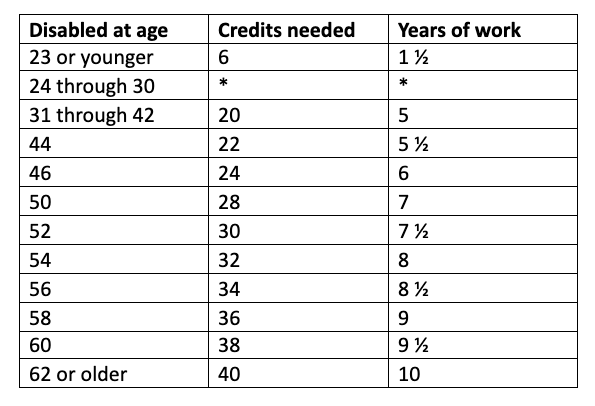 * If you become disabled between the ages of 24 and 30, you generally need credits for half the time between age 21 and the time you became disabled.